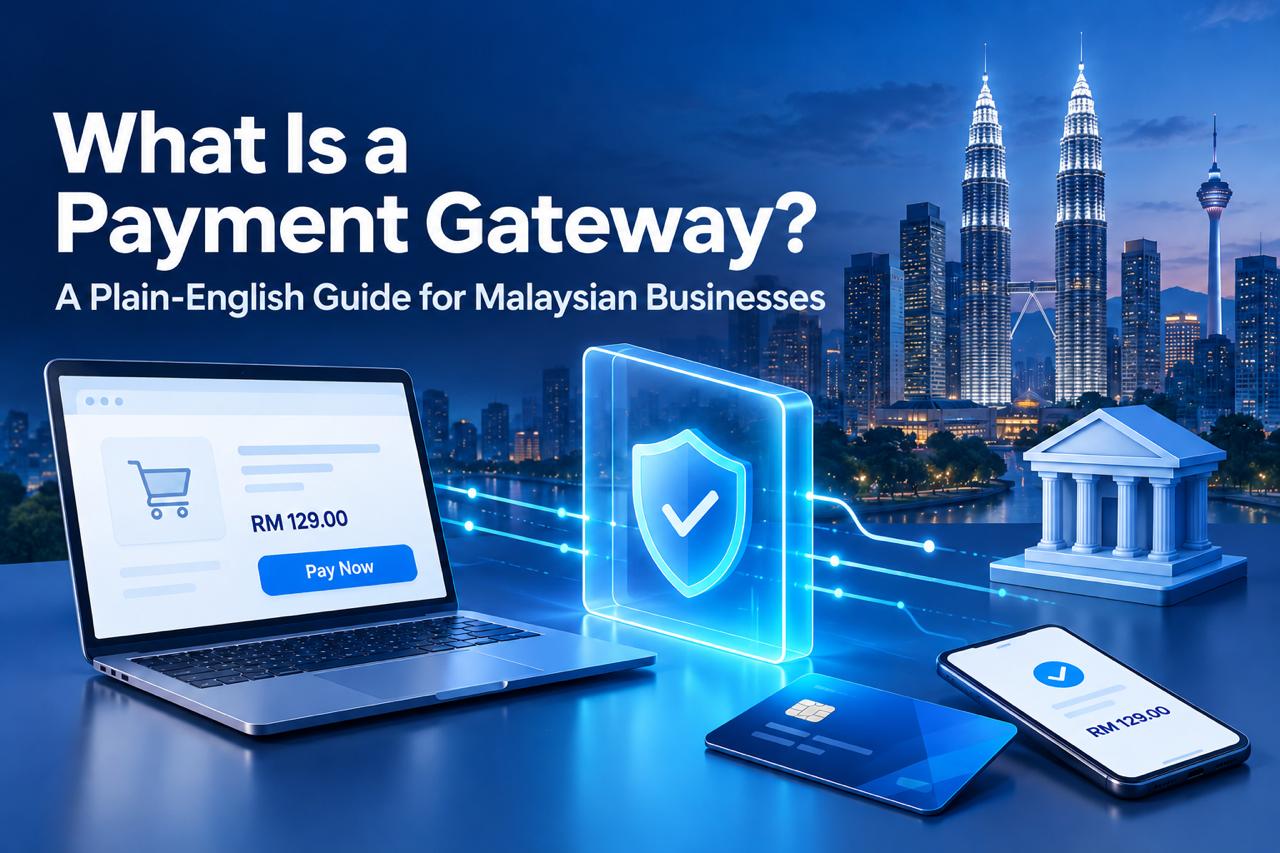
If you run a business in Malaysia, "accepting payments" sounds simple until the first quote arrives. One provider talks about MDR. Another mentions setup fees. A third promises "no monthly fee" and then charges you for the terminal, the settlement, and every refund you process.
The problem is not that payment pricing is expensive. The problem is that it is rarely explained as one number. So let us walk through every line a merchant pays, in plain business language, so you can compare providers on equal terms instead of comparing marketing headlines.
Payment gateway pricing is a bundle, not a rate
When a provider says "our rate is X percent", that single number is usually just one component of the cost. A complete picture has four parts:
- The transaction fee on every sale (MDR)
- One-time or recurring setup and onboarding charges
- The hardware you need to accept the payment
- The operational costs - settlement timing, refunds, chargebacks, support
A cheap MDR with expensive hardware and slow settlement can cost you more across a year than a slightly higher MDR with everything bundled. This is why the total cost of ownership matters more than the advertised rate.
MDR explained: the fee inside every transaction
MDR stands for Merchant Discount Rate. It is the fee deducted from each transaction before the money reaches your account. If a customer pays RM100 and your MDR is a percentage of that sale, the amount credited to you is RM100 minus the fee.
MDR is not a penalty - it covers the cost of moving money securely between the customer's bank or wallet, the card network, the issuing bank and your business. It also pays for the fraud monitoring, dispute handling and uptime that keep your counter running.
Why your MDR is never one single number
This is the part most merchants only discover after signing. MDR typically varies by:
- Payment method. Card payments, e-Wallets, DuitNow QR, FPX and credit card instalment (EPP) are usually priced differently because they run on different rails with different costs.
- Card type. Credit and debit cards are not priced the same, and credit cards often sit in a higher tier than a debit card.
- Card origin. A locally issued card usually costs less to accept than a foreign-issued card, which matters a lot for tourist-heavy retail and F&B locations.
- Transaction size and volume. Some providers tier rates by monthly turnover or average ticket size.
- Business category. High-risk or high-chargeback categories are priced differently from standard retail.
The practical lesson: when you compare MDR between providers, compare it per payment method, not per provider. Ask for the rate on each method you actually plan to accept - cards, e-Wallets, DuitNow QR, FPX and instalment plans - before you evaluate anything else.
Setup, registration and onboarding fees
Setup fees are one-time charges for getting your business live on a provider's platform. Depending on the provider, this line can include any of the following:
- Merchant registration and account activation
- Terminal configuration or deployment
- Integration work for your POS, e-commerce store or accounting system
- Training for your counter staff
Some providers waive setup fees entirely to win new merchants, then recover the cost through a slightly higher MDR. Others charge a modest setup fee and keep the transaction rate lower. Neither model is automatically better - it depends on your volume. If you process a healthy monthly turnover, a lower MDR usually outweighs a one-off setup fee. If you are a new outlet testing the waters, a waived setup fee with a straightforward rate may be the safer start.
Two things worth confirming in writing: whether the setup fee is refundable if your application is declined, and whether there are annual or renewal fees after year one.
Terminal and POS costs: rental versus purchase
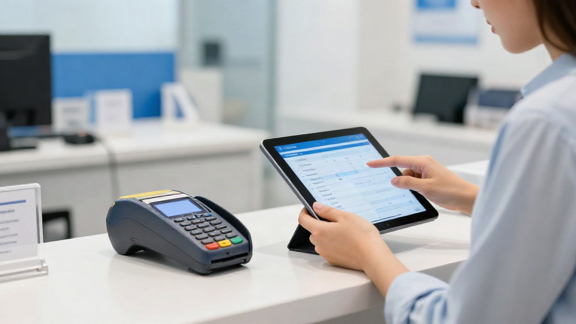
Hardware is where payment quotes diverge the most, and where hidden costs tend to hide.
Rental keeps your upfront cash outlay low and usually includes replacement if a unit fails. The trade-off is a recurring cost that never ends, plus the risk of being locked to one provider's payment rails for the rental term.
Purchase puts the device on your balance sheet but gives you long-term flexibility, since a modern Android terminal or POS device can often run more than one payment application.
Whichever route you take, insist on answers to these questions: Who repairs a faulty unit and how fast? Is there a minimum rental term? Does the hardware support the methods you plan to accept next year, such as instalment payments, not just the methods you accept today?
Settlement timing: the cost that never appears on an invoice
Settlement is when the money from your sales actually lands in your bank account. It is not usually listed as a fee, but it affects your cash flow as directly as any charge.
If payments settle the next business day, you can restock, pay suppliers and cover payroll without dipping into reserves. If settlement stretches across several days - or slows down on weekends and public holidays - you are effectively financing that gap yourself. For a restaurant buying fresh stock daily or a retailer with tight supplier terms, a faster settlement cycle is worth real money.
When you compare providers, treat settlement speed as a pricing feature. It is one of the few payment terms that improves your working capital without costing you an extra ringgit.
e-Wallet, DuitNow and BNPL fees
Malaysian customers now expect to pay the way they prefer, and each method carries its own commercial terms with the provider.
- e-Wallets such as Touch 'n Go, GrabPay, Boost and ShopeePay are essential for retail and F&B, and are usually priced as a separate category from cards.
- DuitNow QR has become the default for many small transactions, which means the fee per ringgit matters even at low ticket sizes.
- Foreign wallets such as WeChat Pay, Alipay and Alipay+ are increasingly relevant for tourist-facing businesses.
- Buy Now Pay Later and bank instalment plans open up higher-ticket sales, and their cost structure is different again.
Accepting more methods usually raises sales, but it also raises the number of fee lines you need to understand. Ask your provider for a single schedule that shows the rate for every method, so you can see the whole picture at once.
Chargebacks, refunds and other charges to watch
These are the charges that surprise merchants most often, because they are not part of the standard quote:
- Chargeback fees, charged when a customer disputes a transaction with their bank, you're charged a fixed fee regardless of whether you win the dispute. This is standard across the industry, but the amount varies.
- Refund fees, which some providers charge to process a refund, and some also keep the original MDR. Find out which. If you're in fashion or any category with high return rates, this compounds fast.
- Inactivity or dormancy fees on accounts with low volumes
- Statement or reporting fees for accounts that need itemised monthly reporting
- Early termination fees if you leave before a contract term ends
None of these are unreasonable on their own. What matters is knowing them upfront, because a provider that is clear about its exceptions is usually clear about everything else too.
A total-cost-of-ownership checklist for comparing providers
Before you sign with anyone, get all of this in writing:
- MDR for each payment method you accept, including foreign cards
- One-time setup and onboarding fees, plus any annual renewal charges
- Hardware cost - purchase price or monthly rental, and the minimum term
- Who owns and services the terminal, and the replacement turnaround
- Settlement cycle and cut-off times, including weekends and public holidays
- Chargeback, refund, dormancy and termination fees
- Whether the terminal supports instalment payments and future payment methods
- What support you get, and through which channel, when a payment fails at your busiest hour
Price your monthly volume against every line above. The provider with the lowest headline rate is often not the provider with the lowest annual cost.
Where VirtuaPay fits
VirtuaPay was built for Malaysian businesses that want payment pricing and payment operations in one place rather than spread across several vendors.
The All-In-One Merchant Terminal accepts Visa, Mastercard and UnionPay alongside local and foreign e-Wallets, so one device covers the methods your customers actually use. The N950S MultiLinks Terminal adds DuitNow, Buy Now Pay Later and multi-bank instalments for merchants who sell higher-ticket items. For F&B, retail and multi-outlet operations, the POS System brings order management, inventory, e-Invoice and reporting into the same platform as your payments. And for vending and unattended businesses, the U2000 keeps cashless acceptance running 24/7.
The point is not more hardware. It has fewer moving parts: one partner, one reporting view, and a pricing structure you can actually follow.
The bottom line
Payment gateway pricing in Malaysia comes down to four questions: what is my MDR per payment method, what do I pay to get started, what does the hardware cost me over time, and how fast does my money arrive?
Get clear answers to those four, and you can compare any provider with confidence - and choose the one that helps you sell more, not just the one that quotes the smallest number.
Talk to VirtuaPay about a payment setup built around your volume, your counter and your growth plans.